Destinations · Seville
A perfect weekend in Seville: two days between the Alcázar, Triana and the city's most enchanting corners
Heritage in the morning, neighbourhoods at dusk and unhurried walks: a 48-hour route designed to feel Seville, not simply to see it.
10 min read
Some cities are visited. Others, for a few days, are lived. Seville belongs to the second kind.
Two days are not enough to see all of it — and there is no need to try. A weekend is enough to walk among palaces, get lost in the lanes of an old Jewish quarter, cross the Guadalquivir at dusk, share a few tapas and discover that some of the best things that happen in Seville appear on no itinerary.
The centre alone holds three UNESCO World Heritage monuments: the Cathedral, the Real Alcázar and the Archivo de Indias. But Seville is far more than its great monuments.
So if you only have 48 hours, our advice is simple: don't try to see everything. Choose well and leave time to enjoy it. This would be our perfect weekend.
01Day 1 · 09:00 — Start at the Real Alcázar
There are few better ways to begin a weekend in Seville. The Real Alcázar is one of the city's great symbols and one of those visits worth making early, before the day gets going.
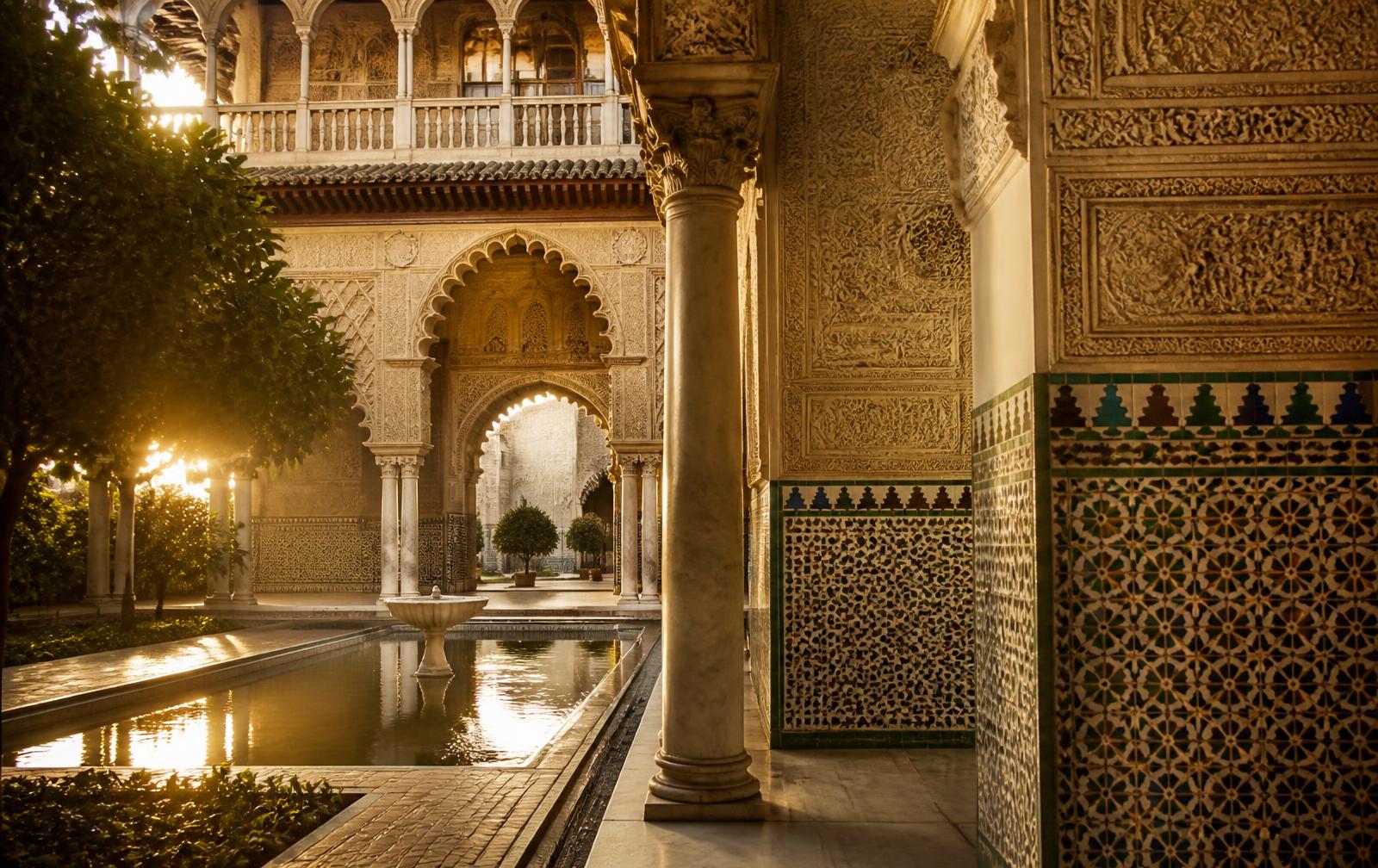
Palaces, courtyards, azulejos, fountains and gardens follow one another behind its walls until, for a few hours, the city outside disappears. Don't walk it watching the clock: arrive early and give it a good part of the morning.
And when you think you have seen the best of it, step out into the gardens. You will probably want to stay a little longer.
- Ideal for
- opening the trip with the city's great icon, unhurried and in good light.
- MIA tip
- book tickets in advance through the official channels. The Alcázar is essential on any first visit, and planning it ahead keeps the rest of the day free.
0211:30 — Get lost in Santa Cruz
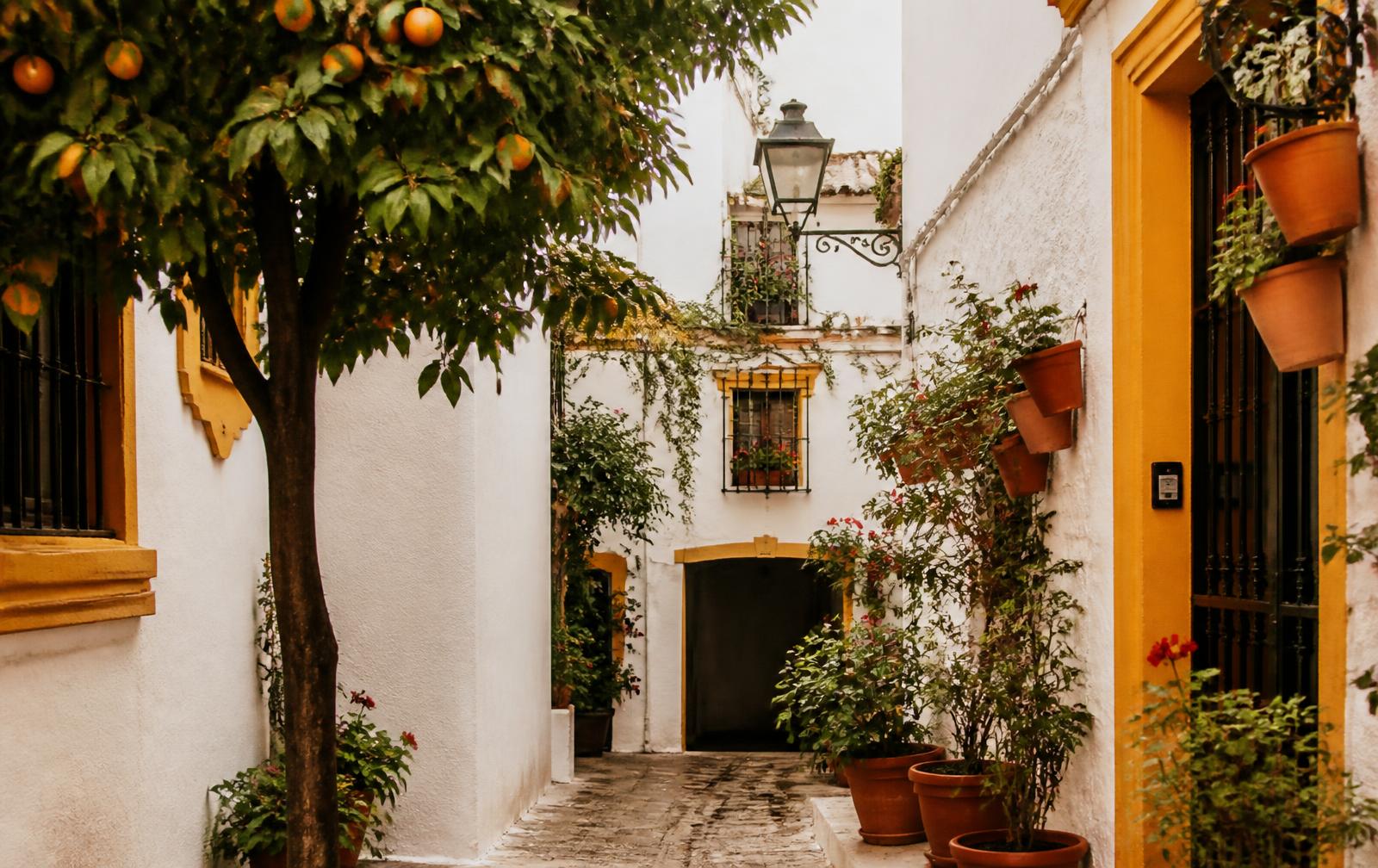
Leaving the Alcázar, don't rush to the next monument. Walk. You are beside Santa Cruz, one of the most characterful parts of Seville and part of the city's medieval Jewish quarter.
Here the plan is precisely to have no real plan: narrow lanes, white façades, orange trees, small squares that appear when you least expect them and courtyards hidden behind an iron gate.
Look for Plaza de Doña Elvira, continue to Plaza de Santa Cruz and find the Callejón del Agua, a 140-metre passage running alongside the quarter. No routes. No maps. Just walking.
- MIA tip
- Santa Cruz changes completely at first light and after dark. If your stay allows it, walk it again once the day is over.
0313:00 — Cathedral and Giralda
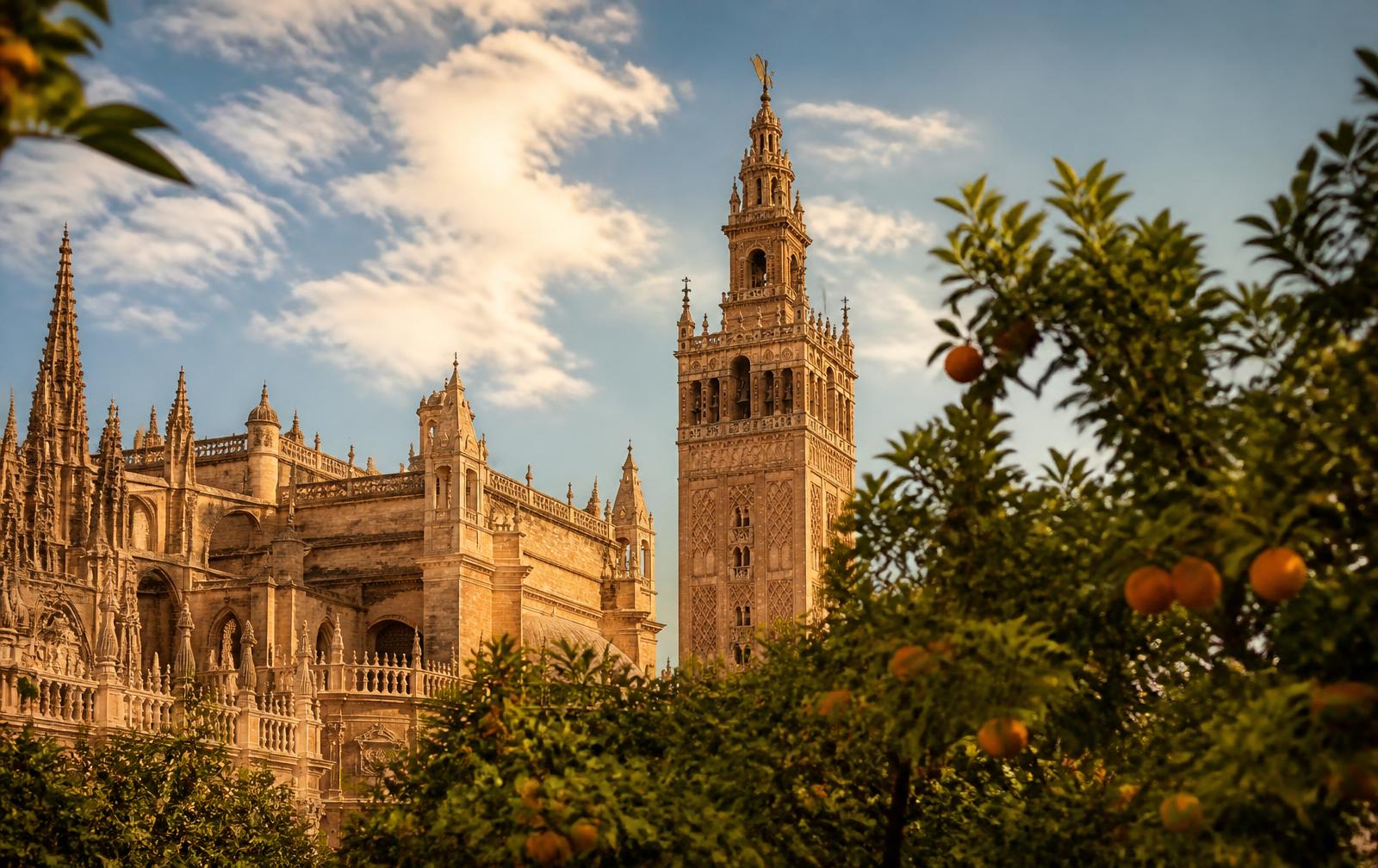
From Santa Cruz it is barely a walk to another of Seville's great stages: the Cathedral and the Giralda. Seville's cathedral is the largest Gothic cathedral in the world, and the Giralda, its bell tower, is one of the city's defining silhouettes.
If it is your first time in Seville, go inside — and yes, climb the Giralda. Much of the ascent is by ramps rather than stairs, a legacy of the original minaret.
At the top waits one of those views that help you understand the city: rooftops, bell towers, courtyards, the irregular weave of the old town and Seville spreading out around you. The combined visit takes roughly 75 minutes, so it fits into a morning without turning the trip into a race.
- Ideal for
- a first visit and the best views over the old town.
0415:00 — Now: lunch without watching the clock
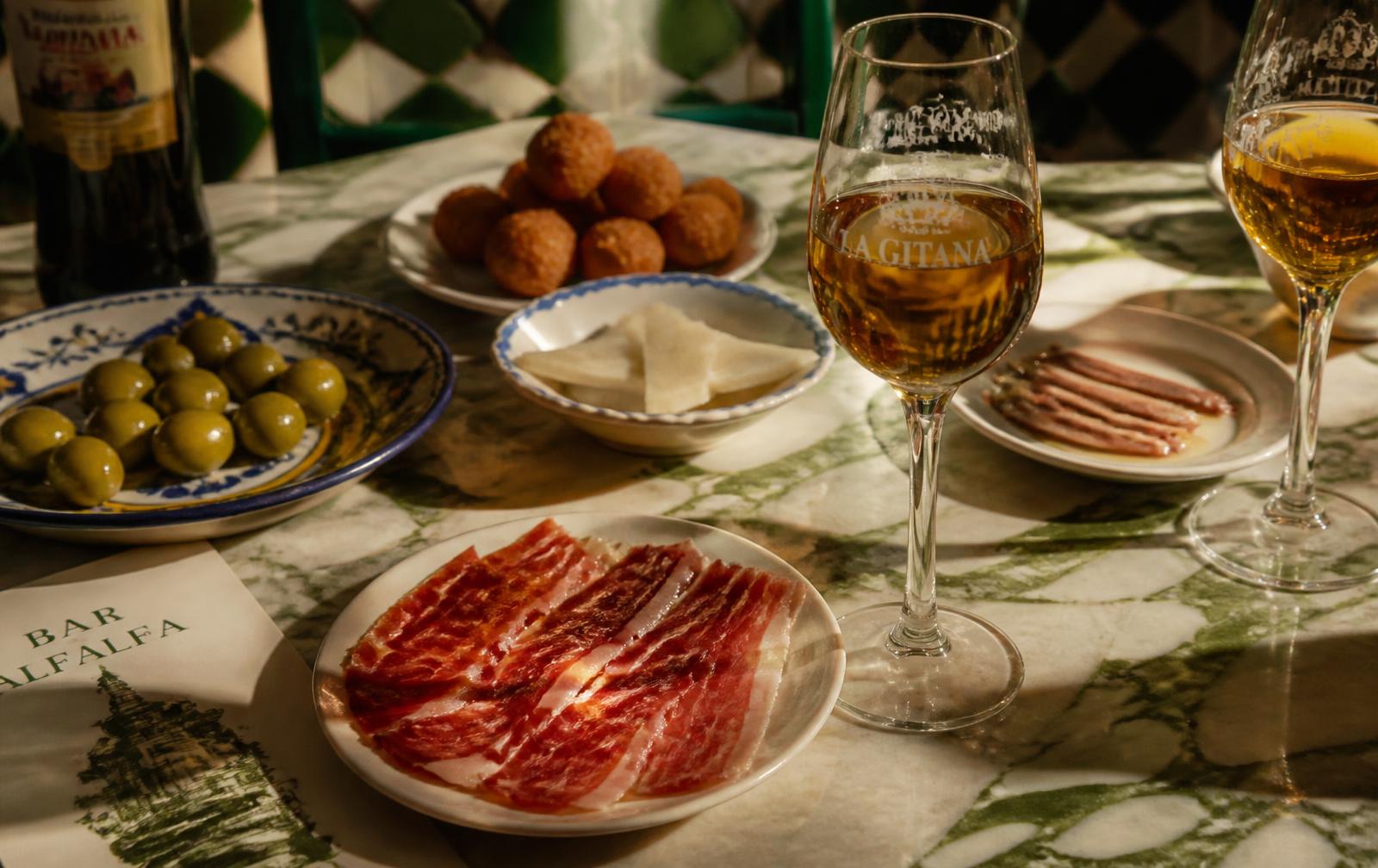
After a full morning, it is time for something very Sevillian: sitting down. Instead of filling the table at once, do the opposite. Order little. Share. Taste. Then order again.
Afterwards the centre lets you walk on towards El Arenal, Plaza Nueva or the riverbank. This is where Seville changes register: we leave the great monuments for a few hours and look for the city that happens in the street.
- MIA tip
- leave time simply to be. Filling every half hour is the surest way to miss what you came for.
0517:00 — El Arenal and the Guadalquivir
Walk towards the river, past the Archivo de Indias and Avenida de la Constitución, then into El Arenal until you reach the Guadalquivir.
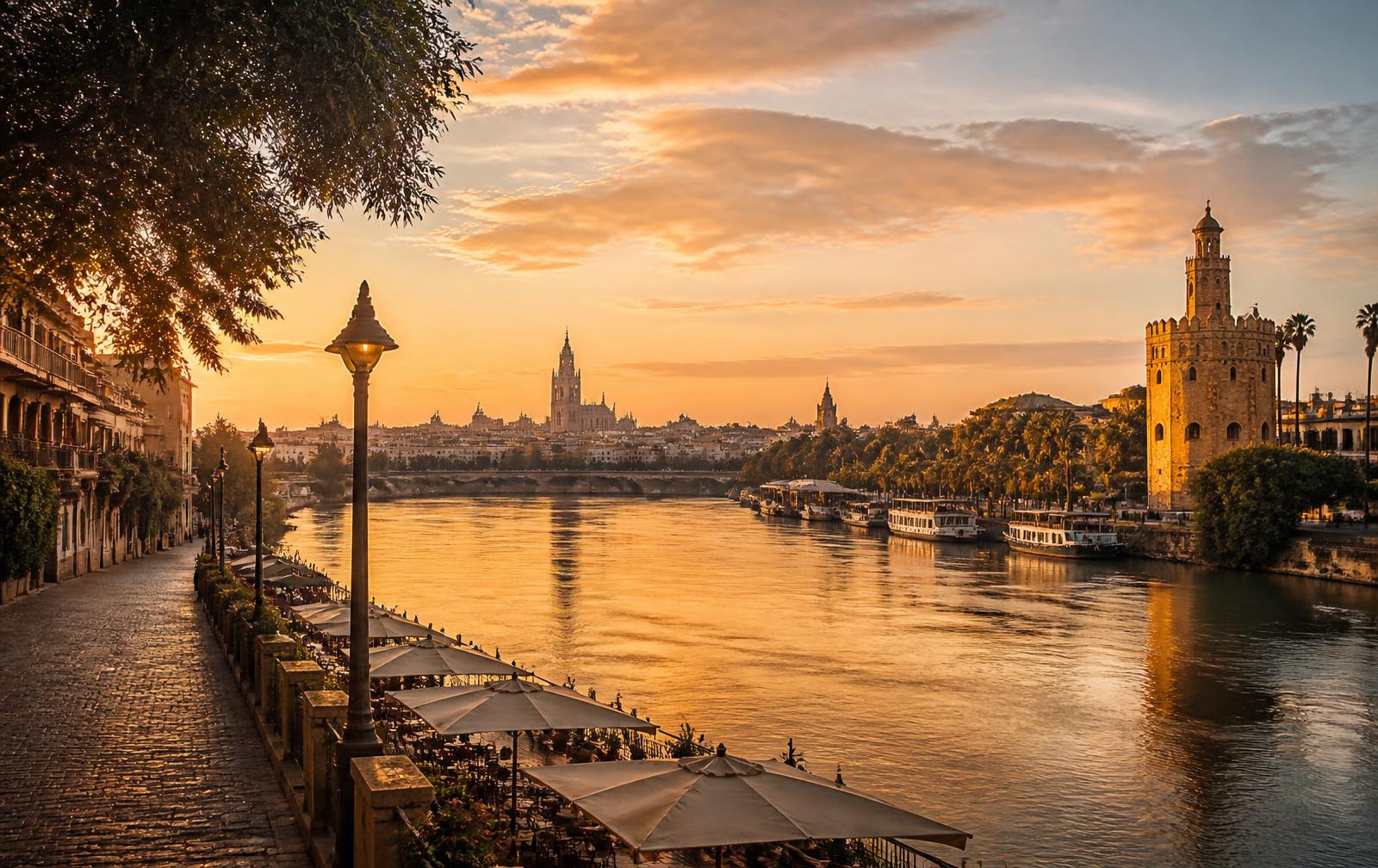
When the Torre del Oro appears, with the façades of Triana on the far bank, you have arrived at one of the essential walks of the weekend. There is nothing special to do — that is the plan. Walk beside the water, sit for a few minutes, watch the boats and continue towards the Isabel II bridge.
0618:30 — Crossing to Triana
There is a particularly beautiful moment on a first visit to Seville: crossing the Triana bridge on foot, the neighbourhood ahead and the monumental skyline behind.
Triana's identity is deeply tied to ceramics, flamenco, the river and its own history — home to generations of flamenco artists, potters, bullfighters and sailors. The bridge ends at Plaza del Altozano.
From there you can visit the Triana market, look for old ceramic workshops, walk along San Jacinto, see Santa Ana or simply head down to Calle Betis. Try not to turn Triana into another list: it is a place to wander.
- Ideal for
- the liveliest, most authentic part of the weekend.
0720:00 — Golden hour on Calle Betis
This is the moment worth timing, because Calle Betis at sunset offers one of the most beautiful views in Seville. Find a terrace, order something and look across the water.
The Torre del Oro. The Giralda above the rooftops. The river. The façades of the centre beginning to light up. Boats passing slowly. And the sky changing colour.
In some cities sunset marks the end of the day. In Seville it usually means another part is starting. Have dinner in Triana and leave the night open: the neighbourhood has a uniquely deep relationship with flamenco, though no show is compulsory. Sometimes it is enough to walk back across the bridge with the city lit on the far bank.
08Day 2 · 09:00 — Plaza de España before everyone else
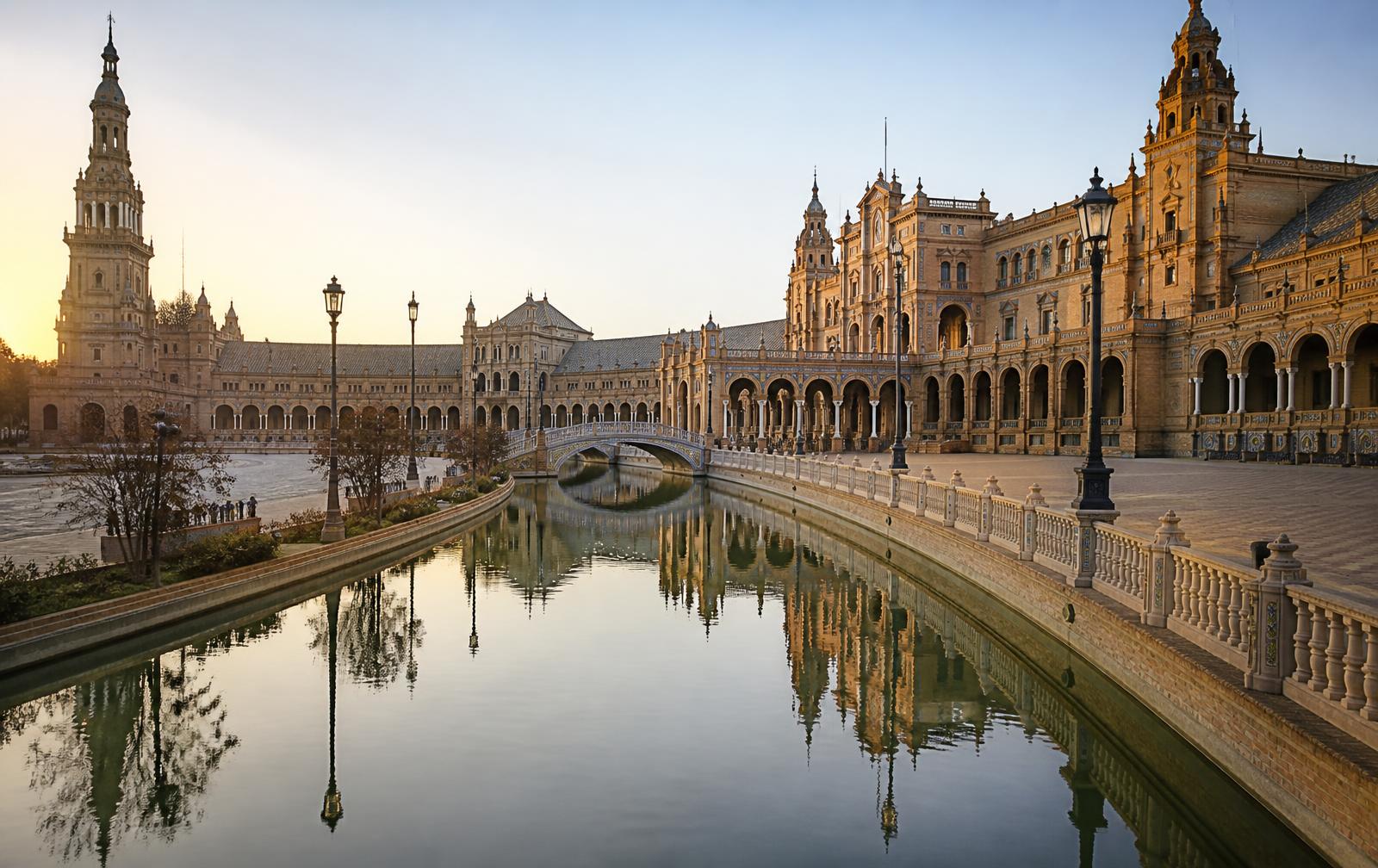
The second day is also worth starting early, this time at Plaza de España — the earlier the better. Designed by Sevillian architect Aníbal González for the 1929 Ibero-American Exposition, it covers roughly 50,000 square metres of buildings, plaza and canal.
The figures matter little once you walk in. The square is vast and semicircular: ceramics, brick, water and two great towers framing it all. Look for the tiled benches dedicated to the Spanish provinces and cross one of its bridges.
- MIA tip
- for photographs and for the space itself, come first thing. Later it fills with life, but those early moments have something special.
0910:00 — Parque de María Luisa
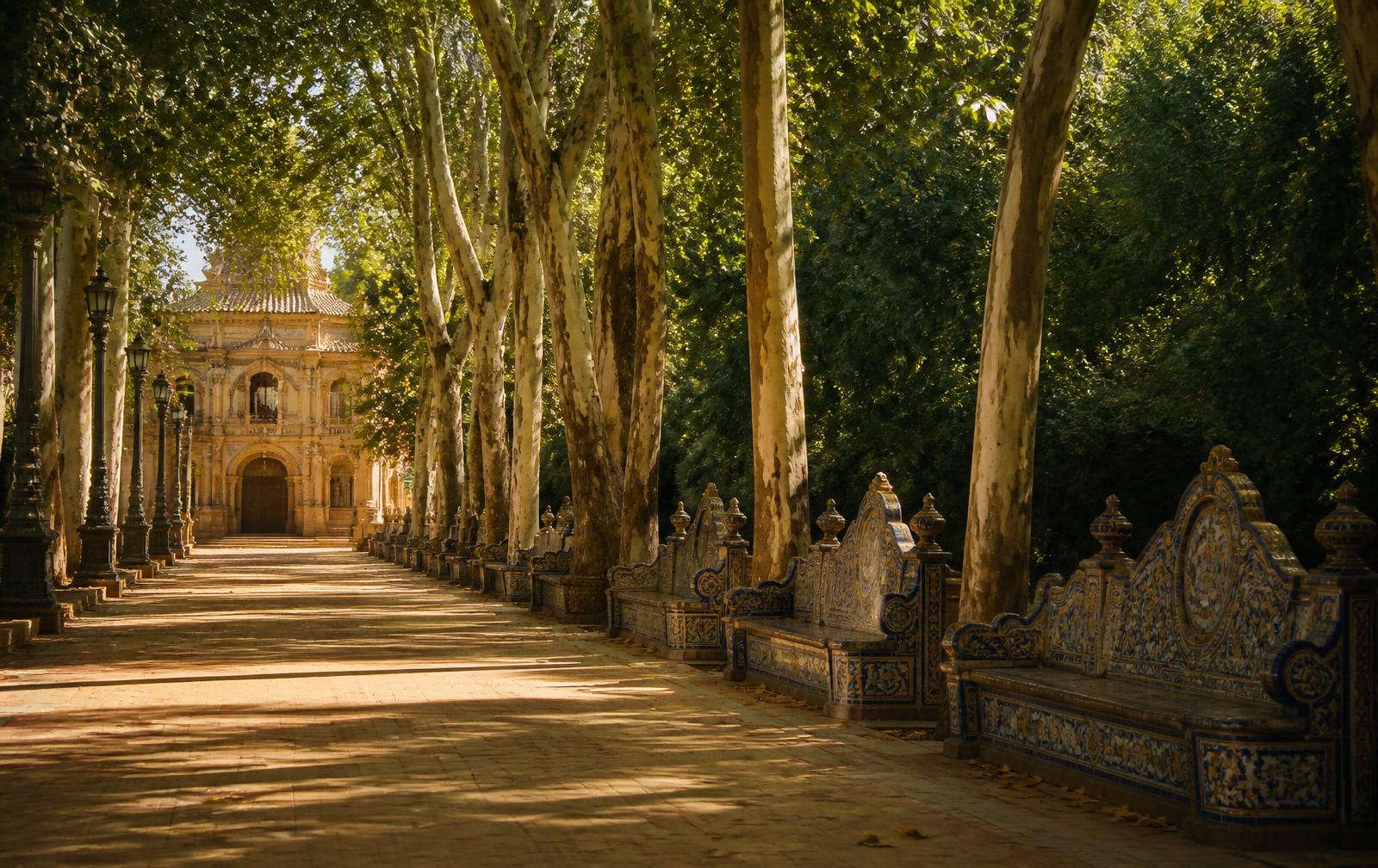
Don't hurry back to the centre. Plaza de España sits within Parque de María Luisa, so keep walking under the trees.
This is the moment to slow down. After a first day full of heritage, Seville rewards an hour with no tickets and no timetables. Wander, find the Glorieta de Bécquer, continue to Plaza de América, sit for a while and enjoy a much quieter Seville.
- Ideal for
- recovering your rhythm after an intense first day.
1013:00 — Plaza del Salvador and street-level Seville
From here, drift slowly back towards the old town, through the Prado de San Sebastián or along streets you missed yesterday. One of the joys of central Seville is how quickly the scenery changes: from the Cathedral's monumentality to a tiny lane, from a wide avenue to a hidden courtyard.
Now look for Plaza del Salvador, one of the city's great meeting points. People come here to talk, to meet, to have a drink, to watch the afternoon go by. That atmosphere is part of the trip too.
Second day, lesson learned: find a good table, share several dishes and let lunch run longer than planned. Then continue towards Alfalfa, Plaza del Pan or the streets leading to La Encarnación, where traditional shops, gastronomy and contemporary Seville live side by side.
1117:30 — Seville from above, and one last sunset
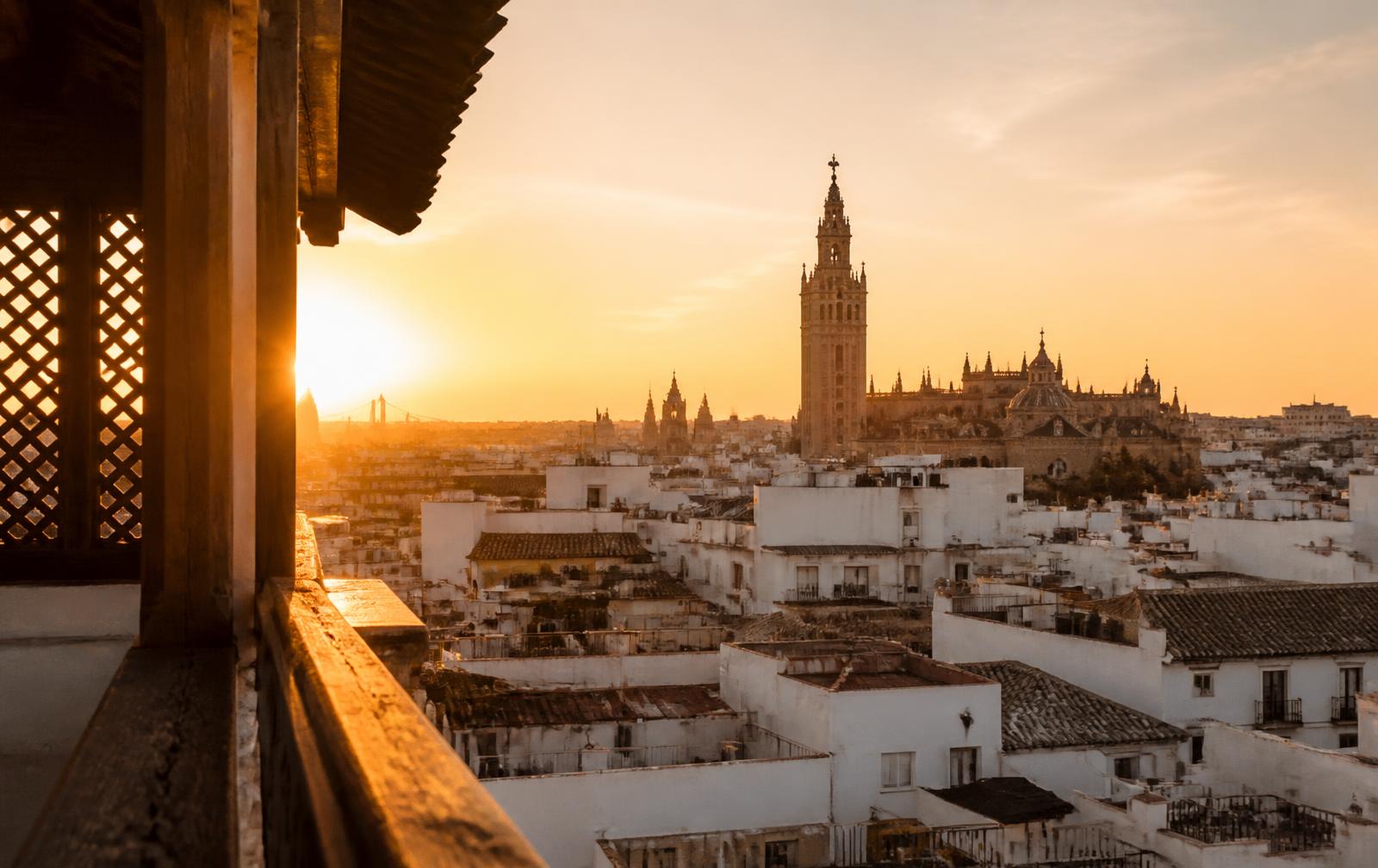
As the afternoon fades, head to Plaza de la Encarnación for the weekend's greatest contrast: after the Alcázar, the Cathedral, Santa Cruz and Triana, you meet Las Setas de Sevilla, the popular name for the Metropol Parasol.
This contemporary structure has an elevated walkway offering a completely different perspective over the old town. Beneath it, the Antiquarium preserves archaeological remains spanning more than two thousand years, from Roman times to Islamic Seville.
If you can, arrive as the sun starts to drop. The Giralda rises out of a sea of rooftops: domes, bell towers, terraces, white houses and warm light falling over the old town. After two days walking its streets, seeing it from above means something different.
For the last night we would write no route at all. Return to Santa Cruz, go back to Triana, find a terrace near El Salvador, walk through El Arenal — or simply follow whichever street you like most. By now you will have discovered something important: Seville works best once you stop following the map.
- MIA tip
- go up as the sun begins to set; it is the best moment of the day to read the city from above.
Real luxury is having time
If we had to reduce the whole weekend to five experiences, they would be these: enter the Real Alcázar early, get lost walking through Santa Cruz, cross to Triana at dusk, see Plaza de España at first light and watch Seville from above at sunset.
The rest is up to you. And the memory you keep longest was probably never planned: a square, a conversation, a tapa ordered by chance, a guitar somewhere behind you, a courtyard whose door was open, or the moment you crossed the Guadalquivir and decided to stop five minutes more.
Visiting Seville quickly is possible. Enjoying it quickly is much harder. That is why our perfect weekend is not about collecting monuments: it is about seeing the Alcázar and then sitting down, climbing the Giralda and then getting lost, visiting Plaza de España and then walking with no direction, crossing to Triana and deciding to stay.
Because perhaps a special escape is not measured by everything we manage to see, but by how much we manage to enjoy it.
Read next: the most beautiful beaches near Zahara
MIA Sevilla
Seville, unhurried.
At MIA we believe the place you stay is part of the experience: somewhere to return to after a day walking Seville, rest, and feel the escape continues even once you close the door.